


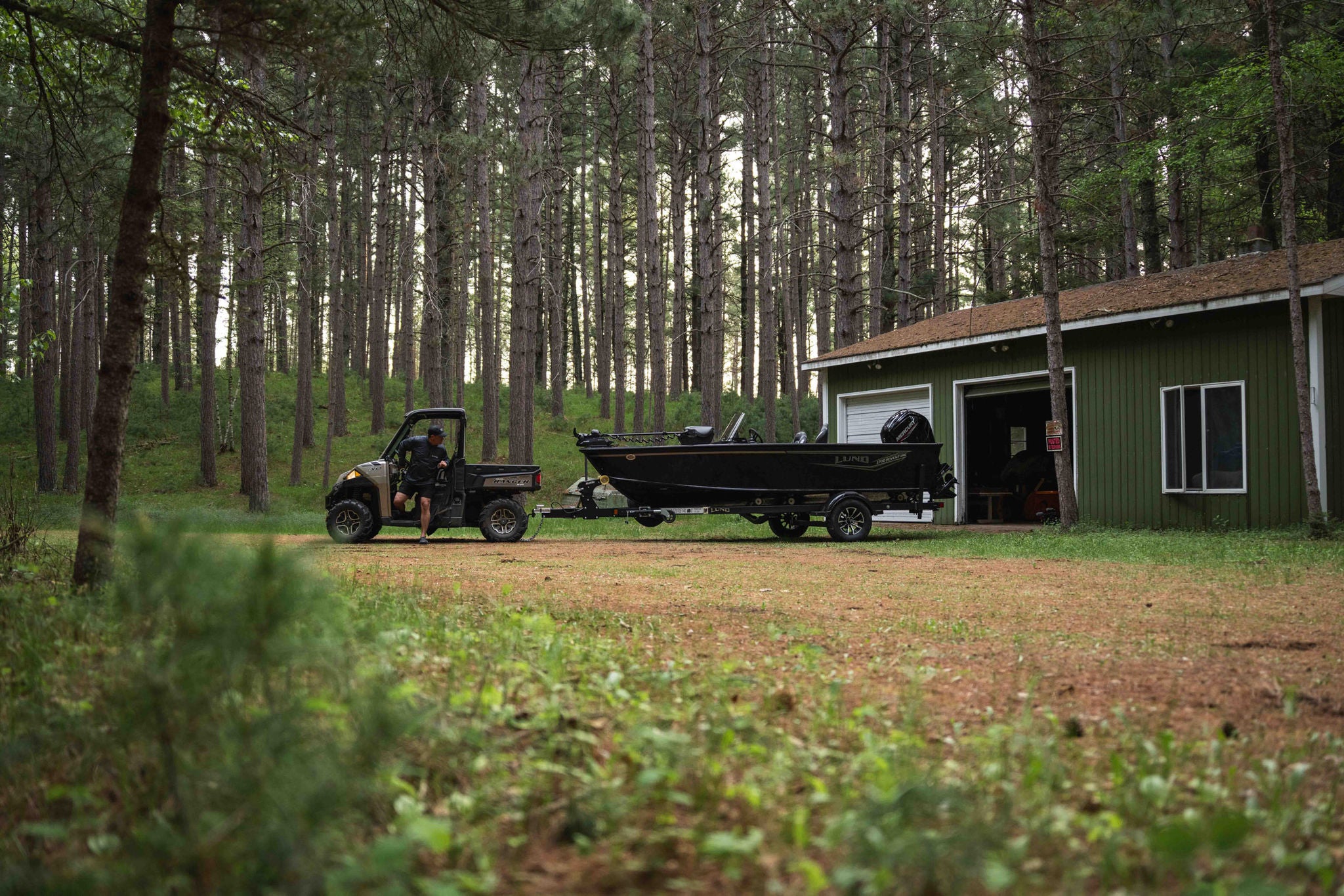
Boat Ramp Tips to Master Your Launch Techniques
The information provided is for general informational purposes only. This information is based on the author’s personal experience and does not constitute financial or legal advice. You should consult with a professional and/or conduct your own independent research to verify any information in this post prior to making a financial decision or otherwise.
Learn how to launch from a Lund Boat's pro. Ace your boat ramp experience with helpful tips, locations, and expert advice for smooth, efficient launchings.
Ace Your Boat Ramp Experience
Despite being the gateway to fun fishing adventures, navigating boat ramps with trailer in tow can be anxiety-inducing for those uncomfortable launching a boat. It doesn’t have to be this way.
With decades of experience as a fishing guide, Lund pro Jason Freed has perfected a safe, efficient and stress-free process for backing up a boat trailer and launching a boat. Here’s a summary of this foolproof procedure, which Freed demonstrates and explains in the following video while launching his 2075 Pro Guide.
Use The Staging Area
Every successful boat launch begins with getting ready at the staging area. This prevents interfering with traffic flow and ensures you’re prepared when it’s your turn to use the ramp. Tasks to complete can include removing the cover, loading fishing equipment, life jackets, food, and other gear into the boat, unhooking tie-down straps, putting the boat plug in, and ropes for tying to the dock in place.
Keep It Connected
What Freed doesn’t do at the staging area is unhook the trailer’s winch strap and safety chain from the boat. Delaying the task until after backing down the ramp prevents mishaps with both bunk- and roller-style boat trailers.
Assess The Situation
Before leaving the staging area, be sure to assess the weather conditions and traffic flow at the ramp. Then make an informed decision on the route you’ll take when backing down, choosing a lane should the location have multiple launch ramps. This step only takes a moment, but helps the following steps go smoothly.
Start Straight
Steering the vehicle and trailer straight when driving into a boat launching lane is important for a successful, stress-free launch. Conversely, a cockeyed trailer often spells trouble as correcting its alignment can be challenging when backing down a ramp. If at anytime the trailer goes too far in one direction when reversing, the best option is to pull forward, get straight and try again.
Use Side Mirrors
According to Freed, the best way to navigate a boat trailer to the water is to use the towing vehicle’s side mirrors. Turning your head to look back is not optimal, but it can be done.
For new Lund owners, the inexperienced or those uncomfortable backing up a trailer, he recommends practicing in a parking lot to learn how to back up a trailer using side mirrors.
Don’t Rush In Reverse
One of the biggest mistakes Freed sees at boat ramps is people backing down too fast and allowing the trailer to swing too far to the side. Instead, go back slowly. An unhurried pace gives better control and allows for immediate steering adjustments to maintain proper trailer alignment and position.
Steer The Trailer Close To The Dock
“The other key thing when backing your boat up is to try and get it within a reasonable distance of the dock, so then you can get in and out of your boat safely without falling or tripping,” Freed said.
Last Step Before Launching
Just before the boat reaches the water, Freed puts the vehicle in park (an emergency brake is recommended) and disconnects the boat from his bunk trailer. For a roller trailer, the winch strap and safety chain should only be removed once the boat is well within the water.
Two-Person Launch
Launching a boat is easier with a friend. One of you can be in the boat while the other backs it into the water via the tow vehicle. Then, the boater can head to the dock and wait for the driver to return from the trailer parking area. Easy-peasy.
Floating A Boat Off The Trailer By Yourself
When launching alone, Freed’s process involves slowly backing up into the water until his 2075 Pro Guide’s transom slides off the bunk trailer. He stops once most of the boat is floating but still securely held within the trailer. Next, Freed gets in the boat, removes motor stabilizing clips, starts his Mercury Pro XS, and then drives the boat off the trailer to the dock.
If uncomfortable launching an untethered boat, an optional step is securing a rope from the bow eye to the trailer. This failsafe prevents the boat from floating away should the trailer go too far into the water.
Tying Up To The Dock
Slowly drive the boat close to the dock, but avoid making contact. Keeping a space buffer and using Lund Fenders when tying up the boat will prevent damage and help keep it in showroom shape.
Secure the boat by tying bowlines from the front and stern cleats to the dock’s mooring points. If you’re like Freed and have a shallow-water anchor, use it to pin the transom in place.
Follow Freed’s simple process, and you’ll find it easy to ace your boat ramp experience. If you ever find yourself in a pinch, don’t hesitate to ask for help. Most anglers waiting at a boat launch are more than willing to lend a hand for both of you to get on the water quickly and headed off to start catching fish.
This website does not provide financial or legal advice. The information available on this website is provided for general informational and educational purposes only and is not a substitute for professional advice. You should consult with the appropriate professionals prior to making any financial decisions. YOUR USE OR RELIANCE ON ANY OF THE INFORMATION PROVIDED HEREIN IS SOLELY AT YOUR OWN RISK. UNDER NO CIRCUMSTANCE SHALL WE HAVE ANY LIABILITY TO YOU FOR ANY LOSS OR DAMAGE OF ANY KIND INCURRED AS A RESULT OF THE USE OR RELIANCE ON ANY INFORMATION PROVIDED.