


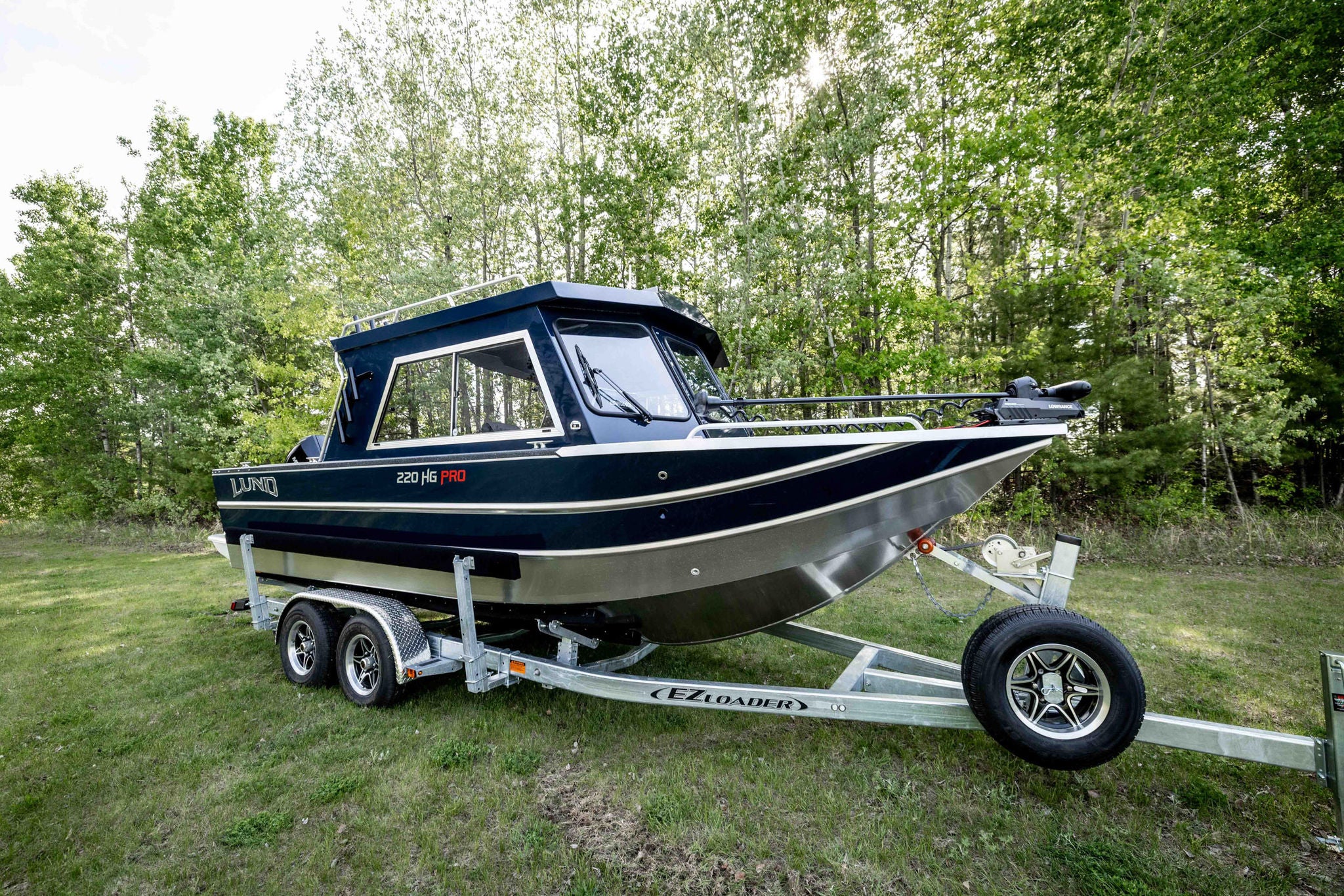
How to Trailer a Boat in Five Easy Step
Find step by step instruction on how to trailer a boat safely and efficiently by securing your boat to the trailer, hitching the trailer to the tow vehicle, and more.
The information provided is for general informational purposes only. This information is based on the author’s personal experience and does not constitute financial or legal advice. You should consult with a professional and/or conduct your own independent research to verify any information in this post prior to making a financial decision or otherwise.
How to Trailer a Boat in Five Easy Steps
Trailering a boat allows you to visit new places, fish at new hotspots, and enjoy all sorts of different waterways. Keeping a boat on a trailer also makes it easy to store and maintain. Lund Boats can be packaged with trailers to help you fish or enjoy watersports anywhere you want.
Before you get on the road, you’ll need to learn the basics of how to secure a boat to the trailer and how to trailer a boat down the road. Follow these five easy steps, and you’ll be rolling down the road toward your next adventure in no time.
Secure Your Boat to the Trailer
Start by making sure the boat is properly secured to the trailer, and this means making connection points at both the bow and stern.
At the bow, the winch strap should be tight so that the bow of the boat is snugged up against the bow stop or bow roller. The safety chain should also be attached to the bow eye.
The stern should be strapped down and tightened up with ratchet or tie-down straps, going from the stern eyes to the trailer.
When the boat’s secure, check all the gear inside to make sure it’s secured, too. Everything in the boat will be subject to strong wind-blast and bumps, and you don’t want to arrive at the boat ramp to discover your life jackets or landing net flew out on the highway.
Hitch the Trailer to the Tow Vehicle
After backing the ball hitch under the receiver and making sure the receiver latch is in the open position, lower the trailer tongue until the receiver and ball hitch mate. Always make sure the ball hitch and receiver are of matching sizes, and that the receiver goes down all the way over the ball hitch. Then close the latch and secure it with a locking pin so it can’t pop open by accident on the roadway.
Attach the Trailer Safety Chains and Emergency Break-Away Brake Cable
Cross the safety chains under the trailer tongue (this will support it and keep it above the asphalt in case the trailer somehow comes unhitched while on the road) and connect them to the eyes or links on either side of the tow vehicle’s hitch. Then connect the emergency break-away cable (which will trigger the trailer brakes if pulled tight) to the tow vehicle in the same way.
Attach and Check the Trailer Lights
Push the trailer light plug firmly into the tow vehicle’s light plug receptacle. Then have an assistant watch the lights as you test the brake, tail, running, and blinker lights to make sure all are working properly.
Apply These Boat Trailering Tips
Keep these tips for how to trailer a boat in mind as you hit the road.
- Allow plenty of extra stopping distance between your vehicle and the one in front of you.
- Try to avoid slamming on the brakes or making fast starts, which can stress the hitch and receiver or cause the boat to shift on the trailer.
- Make wide turns to avoid clipping curbs.
- If you ever feel the trailer swaying as you haul the boat, stop immediately because swaying trailers can get out of control. Sway is most commonly due to improper tongue weight or load distribution. You may be able to remedy the situation by adjusting how the boat or gear is loaded, but in any case, don’t just keep going and hope for the best.
- Whenever you stop, place your fingers on the wheel hubs. They should be cool or slightly warm to the touch. If they’re fire-hot, the bearings need to be serviced as soon as possible.
- Always give the trailer and bearings a few minutes to cool down before launching.
- When you load a boat on a trailer at the end of the day, re-check all the connections between the trailer and tow vehicle before heading for home.
This website does not provide financial or legal advice. The information available on this website is provided for general informational and educational purposes only and is not a substitute for professional advice. You should consult with the appropriate professionals prior to making any financial decisions. YOUR USE OR RELIANCE ON ANY OF THE INFORMATION PROVIDED HEREIN IS SOLELY AT YOUR OWN RISK. UNDER NO CIRCUMSTANCE SHALL WE HAVE ANY LIABILITY TO YOU FOR ANY LOSS OR DAMAGE OF ANY KIND INCURRED AS A RESULT OF THE USE OR RELIANCE ON ANY INFORMATION PROVIDED.